ASPICE without an ASPICE project
Process conformance stops being a second programme run alongside the engineering work and becomes a property of the environment the work happens in.
The problem
Suppliers end up running a second programme purely to prove the first one happened: a process team maintaining traceability matrices, work-product indexes and assessment packs in parallel with the engineering.
That second programme is expensive, always slightly out of date, and produces nothing the product needs. It exists because the tools the engineers use cannot answer the assessor's questions.
- Traceability matrices rebuilt by hand before each assessment
- Work-product indexes maintained separately from the work products
- Consistency between levels checked by reviewers, not by the system
- Assessment preparation is a project with its own schedule
How it works here
Engineers keep producing documents, sheets, drawings and plans. There is no conformance application to open.
Bidirectional traceability is the graph itself. A base practice is satisfied by objects that already exist, so coverage is computed rather than reported.
The ASPICE pack carries the process model: which work products exist, what consistency means between them, and what an assessor will ask for.
Walkthrough
Every capture below is the running product, in the order the work happens.
- Step 1
Work products are the actual work
The system architecture is a drawing engineers maintain because they need it, and it is simultaneously the architecture work product an assessor will ask to see.
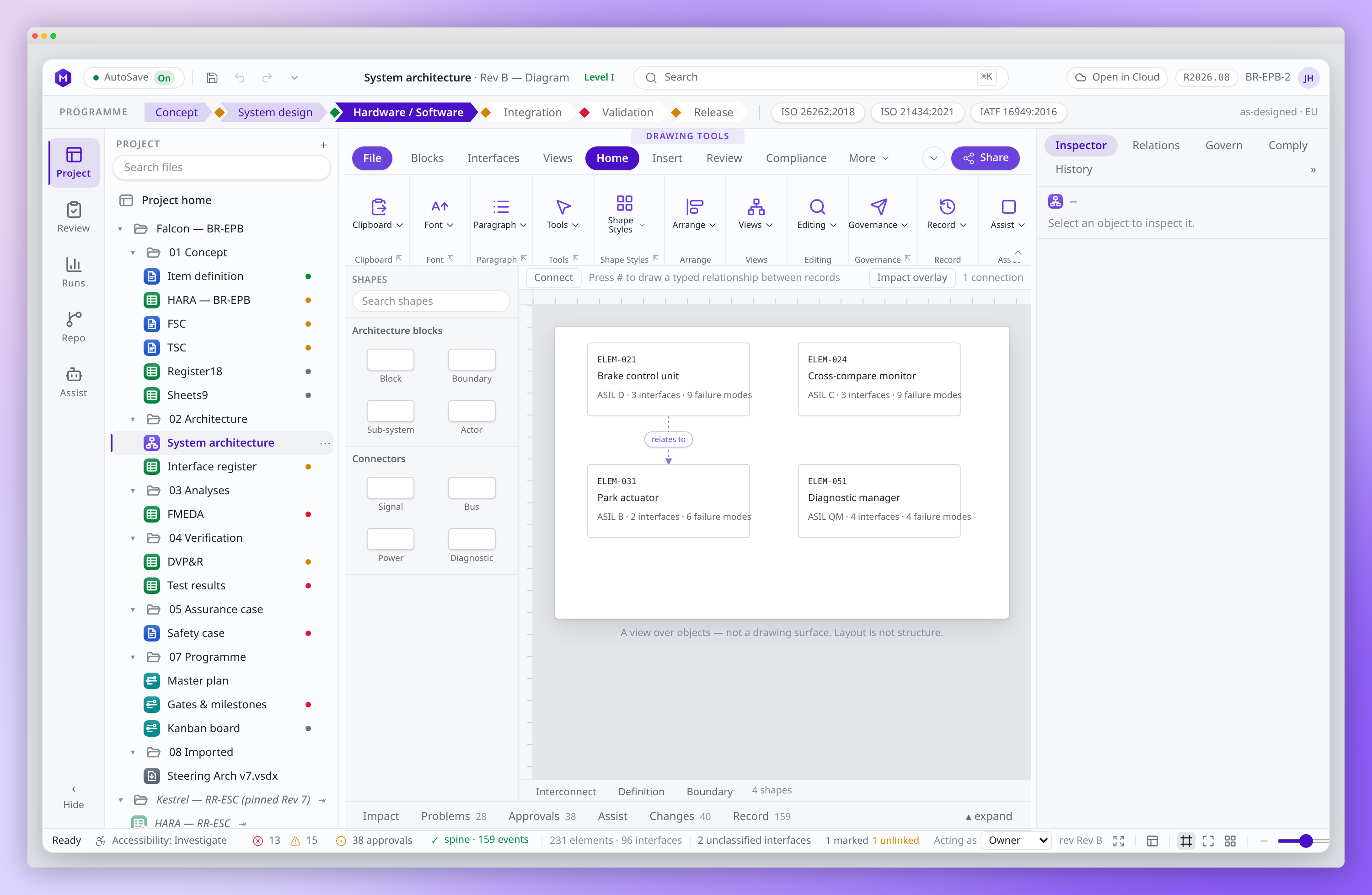
1Elements are objects, so architecture is traceable without a separate matrix. - Step 2
Bidirectional traceability comes from the links people already make
Interfaces name their source and destination elements; verifications name what they discharge. Trace in both directions is a walk of the graph, not a maintained artifact.
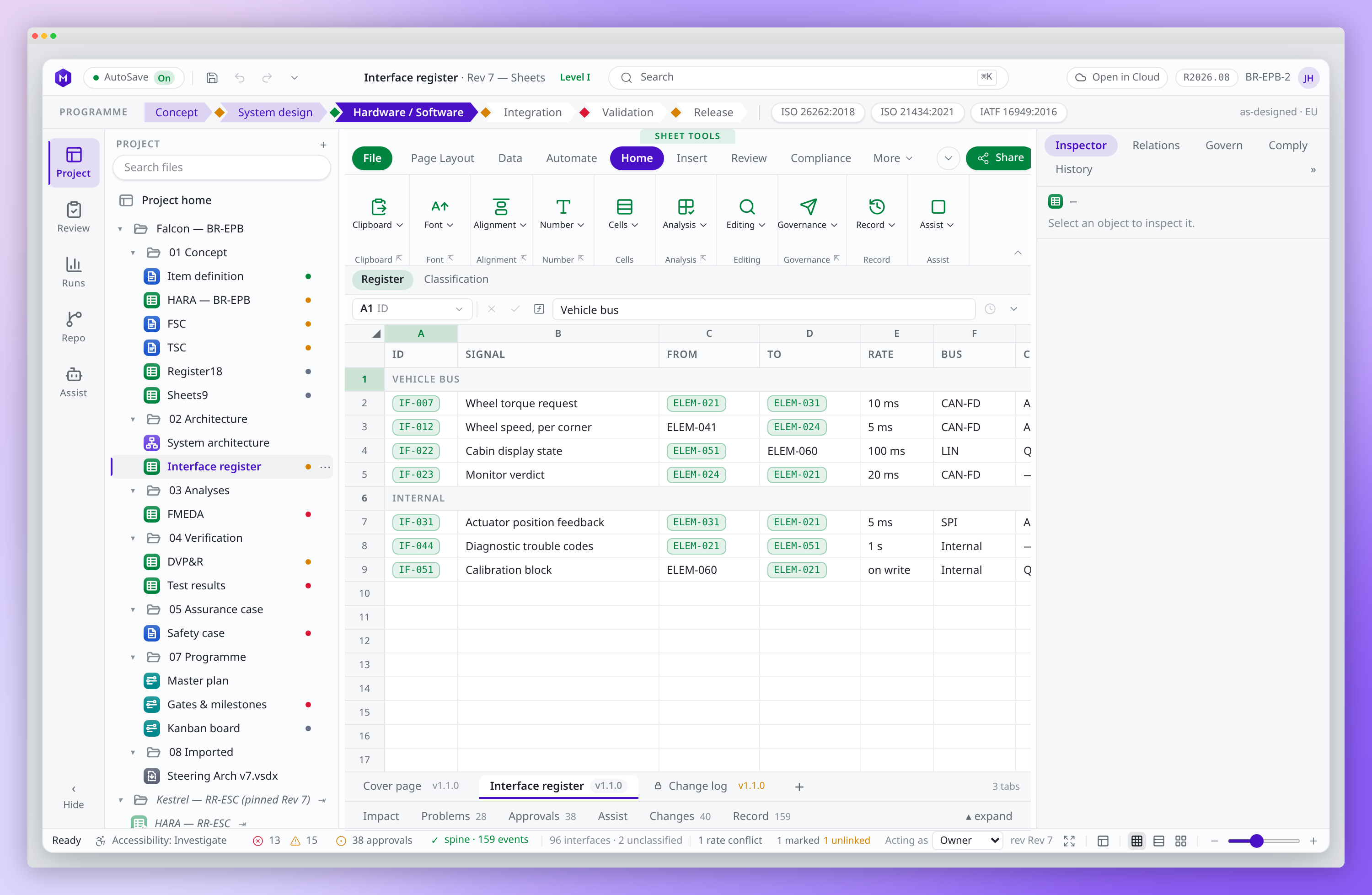
2Every green identifier is a live relationship, not a typed reference. - Step 3
Consistency is checked continuously
Unclassified interfaces, unlinked rows and conflicting rates are surfaced as they occur, which is exactly the class of finding an assessment would otherwise raise months later.
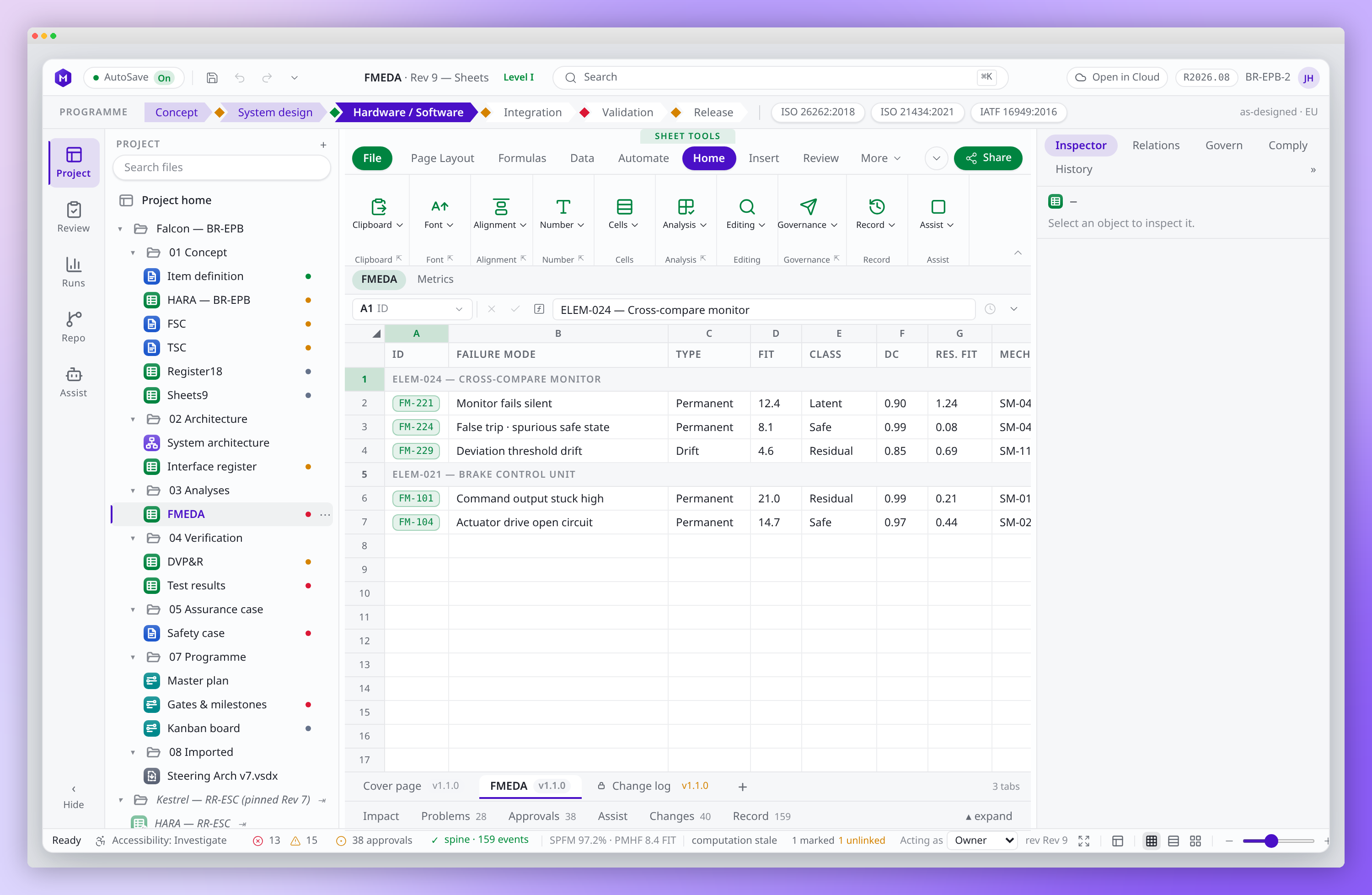
3The problem and change counters are the same signal an assessor samples for. - Step 4
The assessment pack is a view
Gates collect the evidence for each criterion as the work passes through them, so the pack is generated from the record instead of being assembled ahead of the assessment.
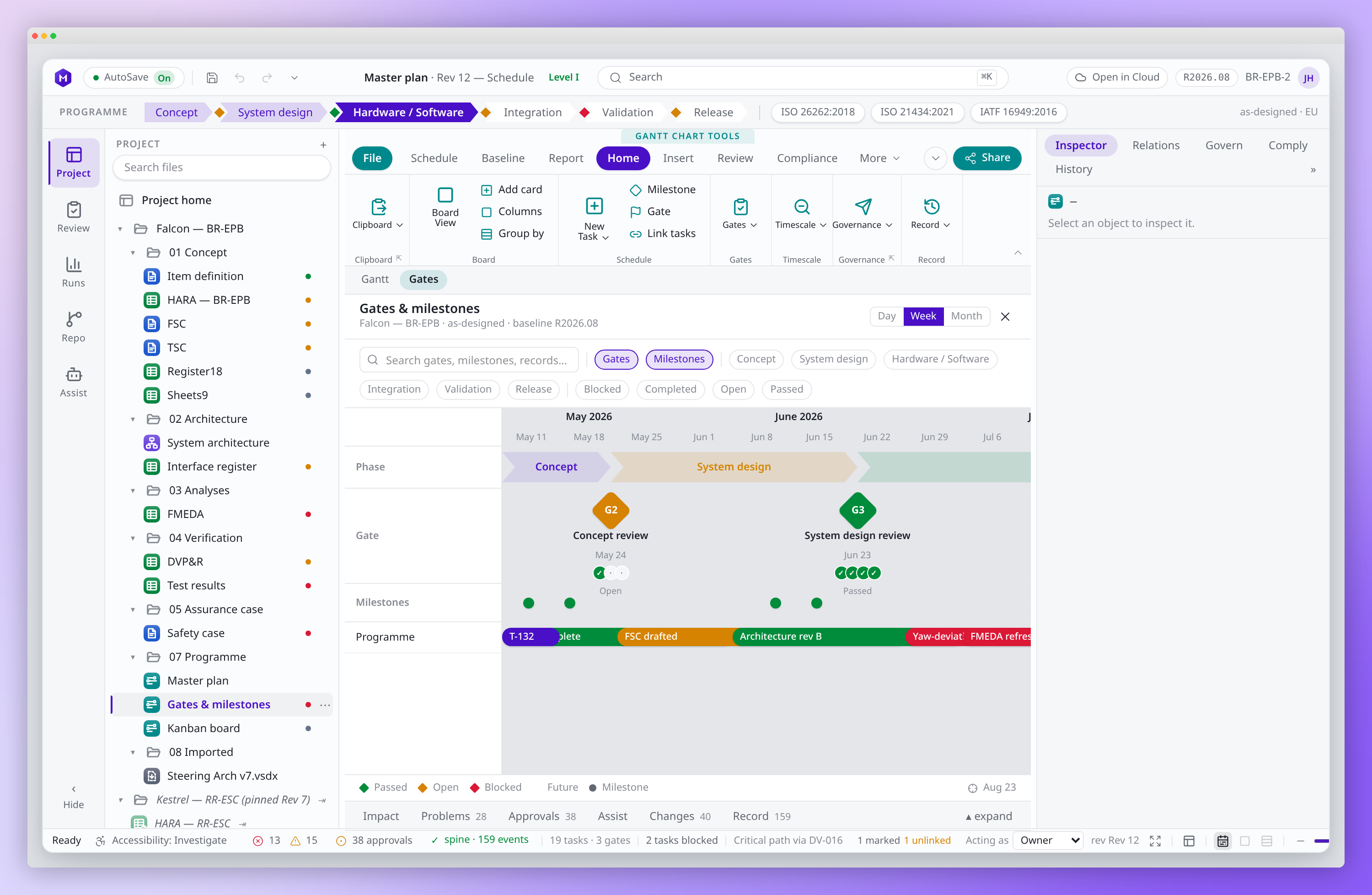
4Nothing here was prepared for the assessment; it is the programme's own state.
What changes
- A process team maintaining conformance artifacts in parallel
- Traceability matrices rebuilt for each assessment
- Findings discovered late, at sampling
- Conformance cost scales with the number of assessments
- Conformance is a property of the working environment
- Traceability is the graph, always current
- Consistency findings surface as they are created
- The assessment pack is generated, not built
Coverage views today are driven by the pack's process model over the objects in the workspace. Formal assessor tooling and rating workflows are not part of this walkthrough.